

Introduction
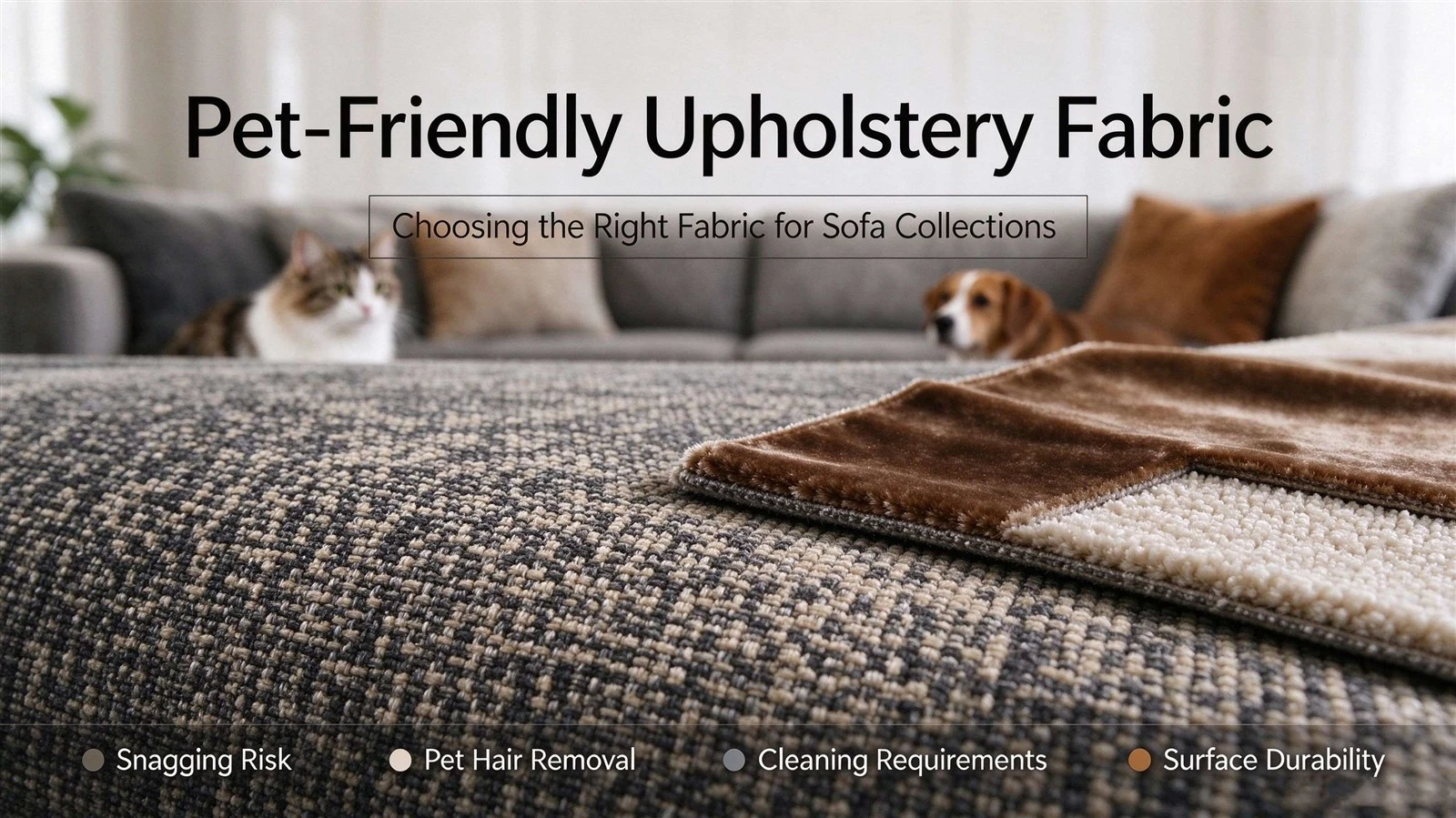
Pets are changing the way many consumers use upholstered furniture. For households with dogs and cats, a sofa needs to handle more than everyday sitting. Loose hair, claw contact, accidental spills and frequent cleaning can all influence how a fabric looks and performs over time.
For furniture brands and sofa manufacturers, this creates an opportunity to develop upholstery collections that address the practical needs of pet-owning households. However, choosing the right material requires more than selecting a fabric described as durable or easy to clean.
A fabric that releases pet hair easily may still be vulnerable to claw snags. A tightly constructed surface may reduce exposed loops, but it does not automatically provide stain resistance. Each characteristic needs to be evaluated separately.
This guide from Kunda Textile explains what makes upholstery fabric suitable for pet-friendly furniture, how different fabric surfaces should be assessed, and what buyers should confirm before placing bulk orders.
1. What Should Furniture Brands Look for in Pet-Friendly Upholstery Fabric?
There is no single fabric that solves every problem associated with pets. Instead, furniture brands should evaluate several practical characteristics according to the intended product and customer group.

1. Snagging Risk
When a pet's claws catch exposed yarns or loops, the fabric surface may develop pulled threads or visible damage. Surface construction, yarn arrangement and loop stability should therefore be checked carefully.
2. Pet Hair Removal
The amount of hair that remains visible on a sofa depends on the surface texture, pile structure, fabric color and the type of pet hair. Smooth surfaces may be easier to brush or vacuum, while some textured surfaces can hold loose hair between their fibers.
3. Cleaning Requirements
Food residue, muddy paw marks and other household stains require appropriate cleaning methods. Buyers should check the fabric's care instructions and confirm whether the recommended cleaning process is practical for everyday use.
4. Surface Appearance Retention
Repeated contact, brushing and cleaning may change the appearance of upholstery fabric. Pile direction, surface texture, pilling and colorfastness should be considered when evaluating a fabric for long-term furniture use.
5. Overall Product Suitability
A fabric should match the sofa design, construction method, target price range and expected maintenance requirements. Pet-friendly positioning should be based on the actual characteristics of the finished fabric rather than a general material label.
2. Which Upholstery Fabric Surfaces Are Worth Considering?
Different fabric constructions create different surface characteristics. For furniture brands, comparing the actual construction is more useful than assuming that every product within one fabric category performs in the same way.
-
Tightly Constructed and Smooth Fabrics
Tightly constructed fabrics with relatively smooth surfaces are worth considering when reducing exposed loops and making routine hair removal a priority. Their surface may provide fewer obvious points for claws to catch than some open or heavily textured constructions.
However, a smooth appearance does not guarantee stain resistance or scratch resistance. Buyers should still evaluate yarn stability, cleaning instructions and product-specific test results.
-
Velvet Upholstery Fabric
Velvet is valued for its soft hand feel and distinctive pile surface. It can be an attractive option for furniture brands developing comfortable and visually rich sofa collections.
For pet-friendly applications, buyers should examine pile height, pile density, fiber composition and surface stability. Different velvet constructions may respond differently to brushing, hair removal and repeated contact.
Pet hair may be visible on certain velvet surfaces, and changes in pile direction can create variations in appearance. A physical sample should therefore be checked under realistic lighting and cleaning conditions.
-
Chenille Upholstery Fabric
Chenille fabrics are often selected for their soft touch and distinctive textured appearance. Their construction and surface characteristics can vary between products, which means their suitability for pet-friendly furniture should be assessed individually.
Buyers should examine the surface yarns, texture density and potential for snagging. It is also useful to test whether loose pet hair can be removed without affecting the fabric's appearance.
-
Bouclé and Looped Fabrics
Bouclé fabrics create a distinctive textured appearance through their looped yarn construction. This surface effect can add visual interest to furniture, but exposed loops may provide points that pet claws can catch.
This does not mean all bouclé fabrics are unsuitable for homes with pets. Loop size, yarn stability and construction density vary between products. Furniture brands should examine actual samples and avoid making broad performance claims without supporting evidence.
-
Suede-Effect Upholstery Fabric
Suede-effect fabrics offer a relatively uniform surface appearance and are worth evaluating for furniture designs that prioritize a soft, understated finish.
Their performance depends on the base fabric, fiber composition and finishing process. Buyers should check how the surface responds to brushing, whether hair is easy to remove and which cleaning methods are permitted.
3. Pet Hair, Claw Snags and Stains: How to Evaluate Each Problem
These three concerns are often grouped together in pet-friendly fabric marketing. However, they involve different surface characteristics and should not be treated as one performance claim.
| Customer concern | What buyers should evaluate |
|---|---|
| Pet hair | Surface texture, pile structure and ease of hair removal |
| Claw snags | Exposed loops, loose yarns and surface stability |
| Stains | Fiber composition, finishing and care instructions |
| Repeated use | Abrasion, pilling and appearance retention |
-
How to Make Pet Hair Less Noticeable
Fabric color can influence how visible pet hair appears. For example, light-colored hair may stand out more on dark upholstery, while dark hair may be more noticeable on pale surfaces.
Mid-tone colors, mixed yarn effects and certain patterns may help reduce the contrast between loose hair and the fabric surface. However, color selection does not replace regular cleaning.
For furniture collections, offering several color options can help customers choose according to their interior style and household environment.
-
How to Reduce Snagging Risks
The first step is to examine the fabric surface. Look for prominent loops, loose yarns, raised details and areas that may catch during contact.
A sample inspection can help identify visible weaknesses, but it should not be presented as a formal snagging test. Where snag resistance is an important product requirement, buyers should discuss an appropriate laboratory method with a qualified testing provider.
-
How to Evaluate Cleaning Performance
Cleaning performance depends on the fabric's fiber composition, dyeing and finishing processes, and the type of stain being considered. A finish designed to improve resistance to one type of stain does not necessarily provide protection against every household spill.
Buyers should request the recommended cleaning instructions and, where relevant, test information for the finished product. Avoid assuming that every fabric described as easy-clean can be washed or treated in the same way.
4. Which Fabric Tests Matter for Pet-Friendly Furniture?

When developing a pet-friendly upholstery collection, furniture brands should evaluate the fabric according to its intended use. Laboratory tests can provide useful information, but each test measures a specific characteristic rather than overall pet resistance.
Relevant evaluation areas may include:
- Abrasion resistance: Evaluates surface wear under specified friction conditions.
- Pilling resistance: Evaluates the tendency of fibers to form small balls on the fabric surface.
- Snagging resistance: Evaluates the formation of yarn pulls under a specified test method.
- Colorfastness: Evaluates resistance to color change or transfer under specified conditions.
- Cleaning performance: Evaluates how a fabric responds to a defined cleaning procedure.
For example, ACT's physical-property guidelines for woven indoor upholstery include pilling, breaking strength and seam slippage. Its guidelines vary according to fabric construction and intended application. These tests do not establish that a fabric is pet-proof.
Reference: ACT Physical Properties Guidelines for Woven Fabrics
https://contracttextiles.org/performance-guidelines/physical-properties-woven-fabrics/
Abrasion results should also be interpreted carefully. Abrasion testing measures surface wear under specified conditions and does not independently predict the service life of an upholstery fabric.
Reference: ACT Abrasion Disclaimer
https://contracttextiles.org/learn/abrasion-disclaimer/
If a furniture brand intends to market a fabric specifically for pet-owning households, it should define the relevant performance requirements first and select suitable tests accordingly.
5. A Practical Sample Checklist Before Bulk Production

A physical sample is essential when evaluating a fabric for a new furniture collection. Product descriptions and specification sheets provide useful starting information, but they cannot replace a hands-on review.
Before approving a fabric, buyers can follow this checklist:
1. Inspect the Surface Construction
Look for loose yarns, exposed loops, uneven pile and other visible features that may influence snagging or maintenance.
2. Check Pet Hair Removal
Use a consistent cleaning tool and method to see how easily loose hair can be removed. Compare several fabric samples under the same conditions.
3. Review Care Instructions
Confirm the recommended cleaning method, permitted cleaning products and any restrictions provided by the supplier.
4. Evaluate Surface Appearance
Check the fabric under different lighting conditions. For velvet and other pile fabrics, observe whether brushing or changes in pile direction affect the appearance.
5. Request Relevant Test Information
Ask which tests have been conducted on the specific fabric and request reports where available. Check the test method, sample identification and reported result.
6. Confirm Bulk Production Specifications
Before ordering, confirm composition, finished width, weight, color reference, order quantity and any agreed finishing requirements.A documented sample approval process helps ensure that the buyer and supplier are working toward the same product specification.
6. How Furniture Brands Can Develop a Pet-Friendly Fabric Collection
A pet-friendly furniture collection does not need to rely on one fabric type. A more flexible product range can include different surface textures, colors and price positions to serve different customer preferences.
- Build a Balanced Product Range
Consider including relatively smooth surfaces, soft pile fabrics and selected decorative textures. Each option should have a clear product positioning supported by its actual characteristics.
- Offer Practical Color Choices
Develop color options that work with different interior styles and household environments. Mid-tone and mixed-color designs may be worth considering where visible pet hair is a customer concern.
- Differentiate Products by Verified Features
Rather than labeling an entire collection as scratch-proof or stain-proof, describe the specific characteristics of each fabric. Where performance claims are important, use relevant product-specific evidence.
- Plan Samples and Repeat Orders
Furniture brands should consider how samples will be approved, how colors will be recorded and how repeat orders will be checked. These steps are important when developing a collection that may be reordered over time.
7. What Should Buyers Ask an Upholstery Fabric Manufacturer?

Choosing a supplier is part of developing a reliable furniture collection. Buyers should communicate their product requirements clearly so that the manufacturer can recommend suitable materials and provide accurate information.
Before requesting a quotation, prepare the following details:
- Intended application, such as sofa seats, backrests or cushions.
- Preferred fabric construction and surface texture.
- Required fiber composition and fabric weight.
- Finished width and color requirements.
- Expected order quantity and purchasing schedule.
- Required finishing options and performance documentation.
- Sample approval and repeat-order expectations.
Providing these details helps suppliers understand the project more accurately and prepare a quotation based on the actual requirements.
Frequently Asked Questions
1. What is the best upholstery fabric for homes with pets?
There is no single best fabric for every pet-owning household. A suitable choice depends on the pet, fabric construction, surface texture, cleaning requirements and intended furniture use. Buyers should compare actual samples before making a decision.
2. Is velvet suitable for pet-friendly sofas?
Some velvet fabrics may be suitable, depending on their pile construction, fiber composition and finishing. Buyers should evaluate pet hair removal, surface appearance and cleaning requirements for each specific product.
3. Is bouclé fabric a good choice for homes with cats?
Some bouclé fabrics have exposed loops that may catch cat claws. However, the risk varies according to construction and yarn stability. Inspecting the actual sample and reviewing relevant snagging information are important before selection.
4. Does high abrasion resistance mean a fabric is pet-proof?
No. Abrasion tests evaluate surface wear under specified friction conditions. They do not directly measure resistance to pet claws, snagging or every type of pet-related damage.
5. Can upholstery fabric be made easier to clean?
Some fabrics can receive finishing treatments designed to improve resistance to certain stains or simplify cleaning. The actual result depends on the base fabric, finishing process and type of stain. Buyers should request relevant product information before making performance claims.
6. What should buyers check before placing a bulk order?
Confirm fabric composition, finished width, weight, color, surface construction, care instructions and relevant test information. Approve a physical sample and clarify MOQ, production scheduling and repeat-order arrangements before confirming the order.
Conclusion
Pet-friendly upholstery fabric is not defined by one fiber, one texture or a single performance number. Its suitability depends on how the fabric is constructed, how it responds to everyday contact and how it can be maintained.
For furniture brands and sofa manufacturers, the best approach is to evaluate each fabric according to the actual needs of the intended customer group. Surface construction, hair removal, snagging risks, cleaning requirements and product-specific test information should all be considered before bulk production.
A well-planned fabric selection process can help brands develop more clearly positioned furniture collections and communicate product characteristics more accurately to their customers.
Looking for Upholstery Fabric for Your Next Furniture Collection?
Kunda Textile is a fabric manufacturer based in Haining, Zhejiang, China. Our product range includes Holland Velvet, Mosha Velvet, Plush, Chenille, Bouclé, Suede and other upholstery and home furnishing fabric options.
For furniture brands, sofa manufacturers, wholesalers and sourcing teams, we can discuss fabric construction, fiber composition, finished width, weight, colors and available finishing options according to your project requirements.
If you are developing a furniture collection for pet-owning households, contact Kunda Textile to discuss suitable fabric options and request samples for your own evaluation.
Company: Haining Kunda Textile Co., Ltd.
Website: https://www.suppliervelvet.com/
Email: brielle@kdwarp.com
WhatsApp: +86 188 5758 1580
🔗Explore Kunda Textile's Fabric Collections


