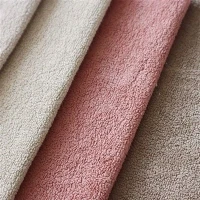
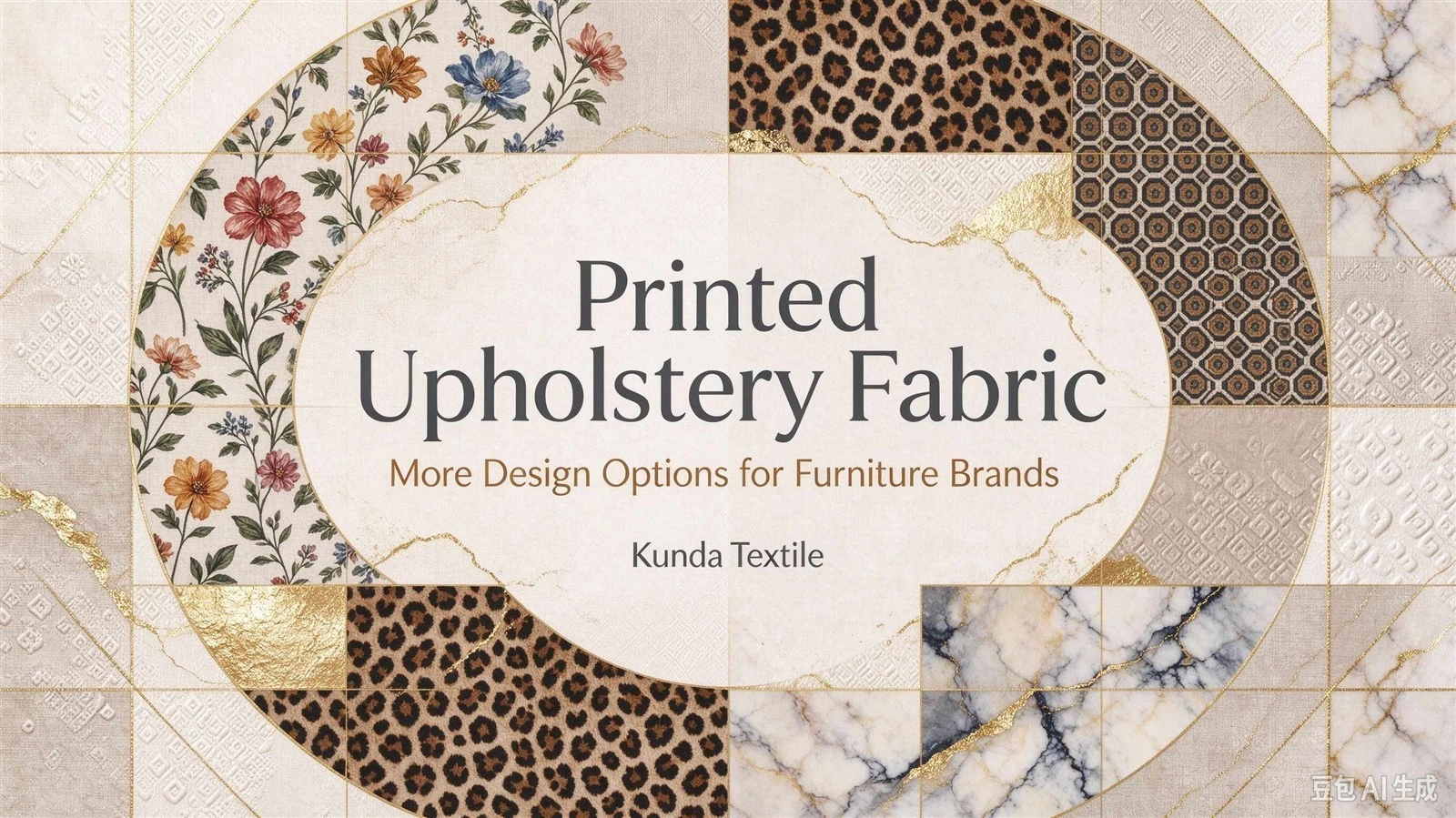
Printed Upholstery Fabric: More Design Options for Furniture Brands
Furniture buyers are looking beyond plain colors when developing new collections. Printed patterns, artistic effects and decorative surface finishes offer more ways to create furniture products that stand out in a competitive market.
For sofa manufacturers, furniture brands, wholesalers and interior furnishing suppliers, printed upholstery fabric can help introduce new designs without changing the overall furniture structure. A carefully selected pattern can turn a standard sofa, accent chair or cushion into a more distinctive product.
However, choosing printed fabric involves more than selecting an attractive pattern. Buyers also need to consider the base material, pattern scale, printing effect, fabric specifications and suitability for the intended application.
At Kunda Textile, we offer printed and decorative fabric options for furniture and home furnishing applications, including floral, animal, geometric and artistic designs. In this article, we look at how furniture buyers can select printed upholstery fabric, evaluate different finishing effects and prepare for wholesale orders.
1. Popular Printed Upholstery Fabric Designs
The pattern is often the first thing buyers notice when evaluating printed upholstery fabric. Different design directions appeal to different furniture styles and target markets. Understanding these options can make product development more focused.
-
Floral Upholstery Fabric
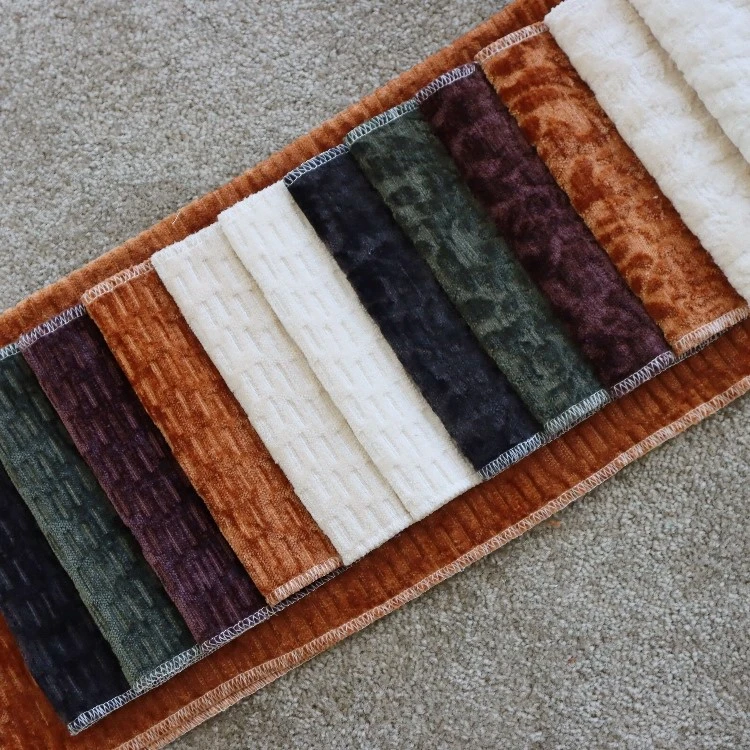
Floral designs bring decorative patterns inspired by flowers, leaves and botanical elements to furniture surfaces. Depending on the motif size and color combination, they can create anything from a subtle decorative effect to a more noticeable statement design.
For furniture manufacturers, floral printed fabrics can be considered for accent sofas, upholstered chairs, cushions and selected curtain applications. Buyers should review the pattern repeat and placement to ensure that the design works well across the finished product.
-
Animal Print Upholstery Fabric
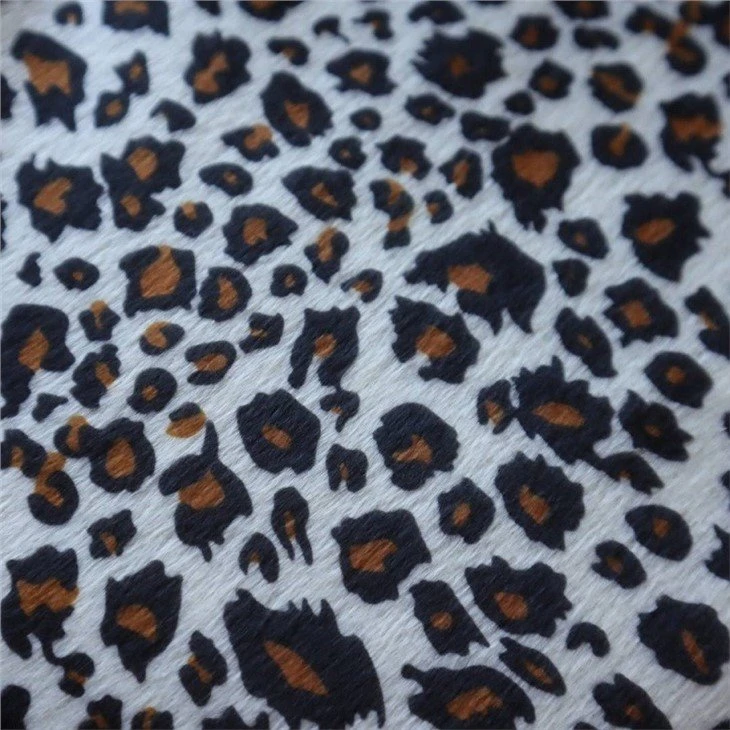
Animal patterns, including leopard-inspired designs, offer a different visual direction for furniture collections. They are often considered when a product needs a more distinctive decorative feature.
For buyers developing decorative furniture or statement pieces, animal prints can be evaluated alongside plain fabrics and other patterns to create a coordinated range. Color selection and pattern scale should be reviewed carefully before production.
-
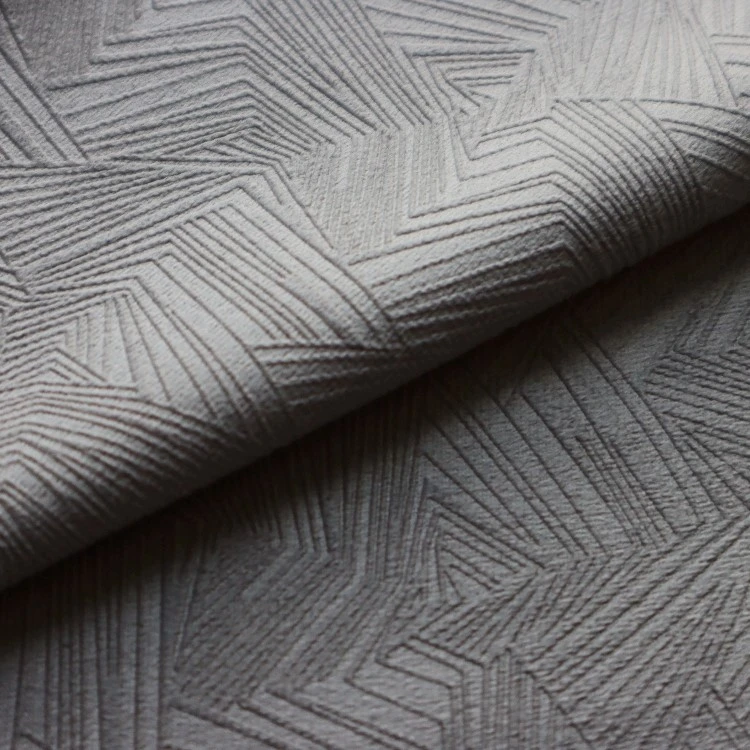
Geometric Upholstery Fabric
Geometric designs use shapes, lines and repeated arrangements to create a structured visual appearance. They can be suitable for furniture collections that require clear patterns and coordinated decorative details.
When sourcing geometric printed fabric, buyers should pay attention to pattern alignment, repeat size and cutting direction. These details can affect the final appearance of sofa panels, seat cushions and other upholstered sections.
-
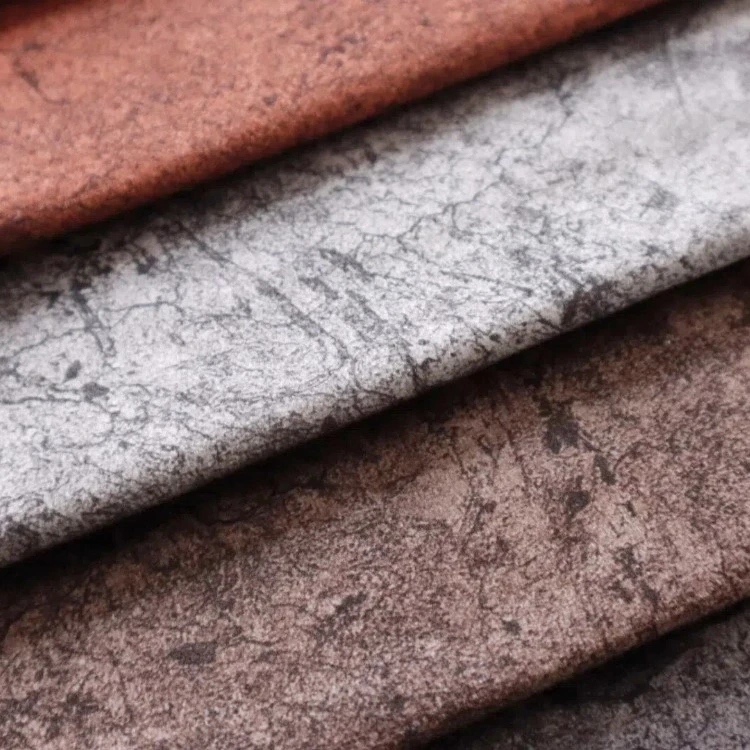
Marble and Artistic Printed Designs
Not all printed upholstery fabrics rely on traditional repeating motifs. Marble effects, abstract patterns and artistic textures provide alternative design options for furniture brands looking for a less conventional appearance.
These designs can be considered for feature sofas, accent chairs, cushions and decorative interior products. Buyers should evaluate the overall pattern distribution on a larger sample, rather than judging the design from a small cropped image.
🔗Explore: Kunda Textile Printed Fabric
2. Printed Fabric Is More Than a Pattern
A printed design is only one part of the finished fabric. The base material and its surface characteristics also influence how the pattern appears and how the fabric performs in its intended application.
For example, a printed pattern on a smooth surface may appear different from the same design on a textured or pile fabric. The surface structure, color background and finishing process all need to be considered during development.
For this reason, buyers should select the fabric base before finalizing the printing plan. A suitable base helps the supplier assess the proposed design and discuss the available processing options.
3. Printing, Gold Foil and Embossing: Which Finish Should You Choose?
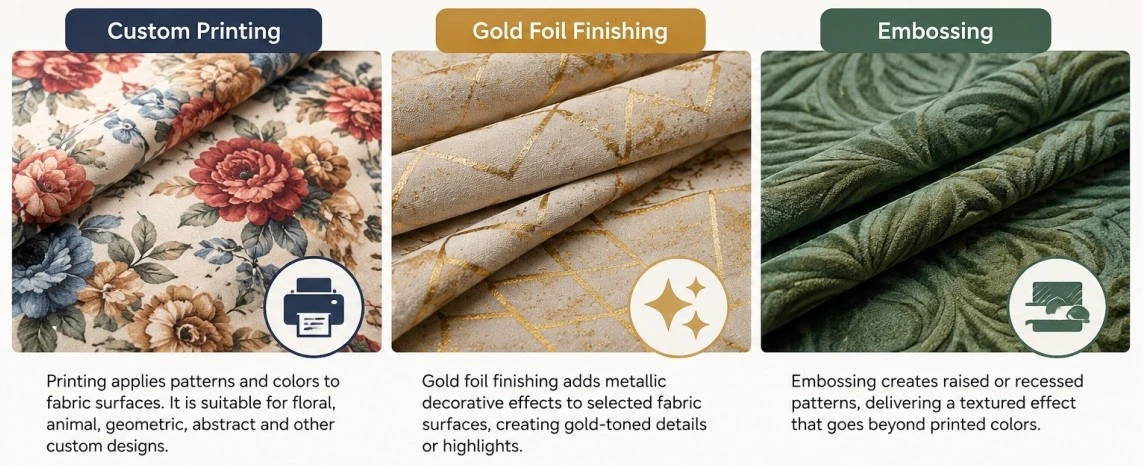
Besides conventional printed patterns, decorative finishing can introduce additional visual details to upholstery fabrics. Printing, gold foil and embossing each create a different surface effect and should be selected according to the product design.
-
Custom Printing
Printing is used to apply patterns and colors to a fabric surface. It can be considered for floral, animal, geometric, abstract and other customized designs.
For furniture brands, custom printing provides an opportunity to develop patterns that match a particular collection or market direction. Buyers can provide reference images or design files for discussion with the manufacturer.
-
Gold Foil Finishing
Gold foil finishing introduces a metallic decorative effect to selected fabric surfaces. Depending on the design, it can add gold-toned details or highlights to a pattern.
This process can be considered for furniture collections that require a more decorative appearance. The final result should be checked on an actual sample because the visual effect depends on the fabric base and processing conditions.
-
Embossing
Embossing creates raised or recessed patterns on the fabric surface. It provides a textured effect that differs from a design created only through printed colors.
Embossed designs can be considered when buyers want a more dimensional surface appearance. Pattern clarity and texture should be evaluated on the selected base fabric before confirming bulk production.
Important: Not every fabric base is suitable for every finishing process. Printing, gold foil and embossing options should be confirmed according to the selected material and production requirements.
4. How to Develop Custom Printed Upholstery Fabric
For furniture brands and wholesalers, custom printed upholstery fabric can help create a more differentiated product range. A clear development process makes it easier to communicate design requirements and review the finished result.
Step 1: Provide a Design Reference
Share a pattern image, artwork file, physical fabric sample or other visual reference. If you have a preferred color direction, include that information as well.
Step 2: Discuss the Fabric Base
Identify the intended application and discuss which available fabric base is suitable for the design. Surface texture and construction should be considered before selecting a processing method.
Step 3: Confirm Pattern and Color Details
Review the pattern scale, repeat arrangement, color combination and other visual requirements. This helps reduce misunderstandings during sample development.
Step 4: Review the Physical Sample
Check the actual sample for color, pattern clarity, surface appearance and hand feel. If a decorative finish is required, review that effect separately as well.
Step 5: Confirm Specifications for Bulk Production
Once the sample is approved, confirm the agreed fabric specifications, order quantity, quotation, packaging and production arrangements.
Keeping the approved sample and written specifications is important for repeat orders. These references help both parties review subsequent production against the original requirements.
5. What Wholesale Buyers Should Check Before Ordering
A printed fabric may look attractive in a product photograph, but wholesale buyers need to evaluate more than appearance before placing an order. Clear specifications help manufacturers understand the project and provide more relevant quotations.
The following details should be confirmed during sourcing:
- Fabric composition: Confirm the required fiber content.
- Fabric width and weight: Specify the required width and GSM.
- Pattern and color: Provide approved references or design files.
- Printing or finishing method: Confirm the required surface treatment.
- Application: Explain whether the fabric is intended for sofas, chairs, cushions, curtains or another product.
- Order quantity: Provide the estimated sample and bulk requirements.
- Quality requirements: Identify any required testing standards or performance specifications.
For repeat purchasing, buyers should also retain the approved sample and production details. This makes it easier to communicate changes and compare later orders.
6. Why Work with Kunda Textile for Printed Fabric Sourcing?
Finding a suitable printed fabric supplier involves more than comparing product photographs and quotations. Buyers need a manufacturer who can understand the intended design, discuss material suitability and communicate clearly throughout the sampling and ordering process.
Kunda Textile supplies printed and decorative fabrics for furniture and home furnishing buyers. Our product range includes floral, animal and geometric designs, as well as artistic printed effects and selected embossed and gold foil finished fabrics.
We welcome inquiries from furniture manufacturers, upholstery fabric wholesalers, distributors and interior furnishing suppliers looking for printed fabric options or customized designs.
If you have a pattern reference, a target fabric specification or an upcoming furniture collection, share your requirements with our team. We can discuss suitable product options and the next steps for sample development.
🔗Explore Kunda Textile's Fabric Collections
Looking for a Printed Upholstery Fabric Supplier?
Send us your preferred design, fabric requirements, intended application and estimated order quantity. Kunda Textile welcomes the opportunity to discuss your next fabric sourcing project.

Frequently Asked Questions
1. What is printed upholstery fabric?
Printed upholstery fabric is a fabric with patterns or decorative designs applied to its surface through a printing process. It is used in selected furniture and home furnishing applications, depending on the material and specifications.
2. What printed patterns are available for upholstery fabric?
Common design directions include floral, animal, geometric, abstract and other decorative patterns. The available designs depend on the fabric range and customization requirements.
3. Can I request a custom printed fabric design?
Buyers can provide design images, artwork files or physical references for discussion. The manufacturer can evaluate the selected fabric base and confirm the available printing options.
4. What is the difference between printing, gold foil and embossing?
Printing applies colors and patterns to the fabric surface. Gold foil adds metallic decorative details, while embossing creates raised or recessed surface textures.
5. What information is needed for a wholesale printed fabric quotation?
Buyers should provide the fabric type, intended application, composition requirements, width, weight, pattern reference, finishing requirements and estimated order quantity.