

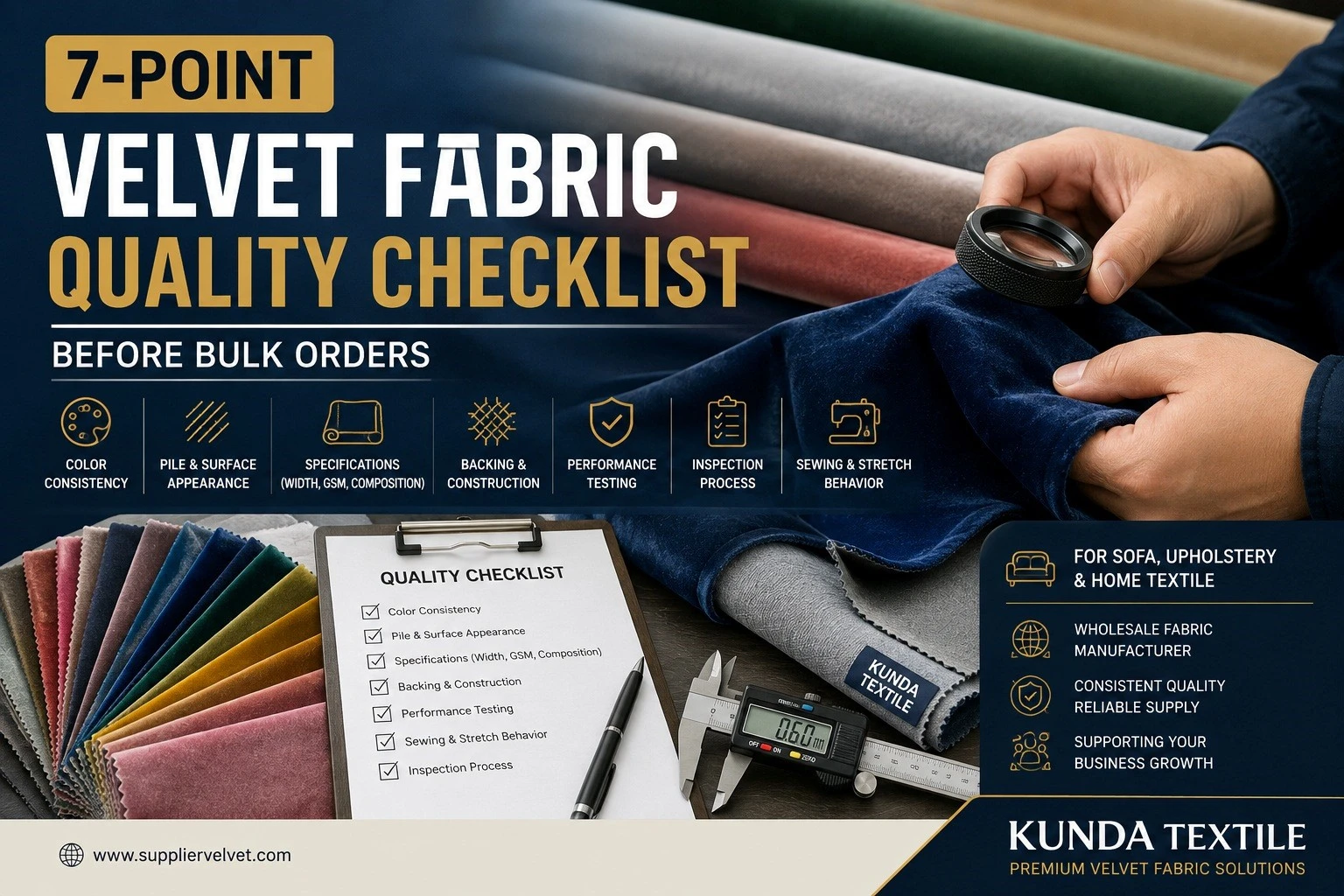
When sourcing velvet fabric for sofa upholstery, furniture manufacturing or home textile projects, a sample can show you the color and hand feel-but it cannot tell you everything about a bulk order. For importers and furniture factories, differences in pile appearance, fabric width, backing or technical specifications can affect cutting plans, production efficiency and finished-product consistency.
Before confirming a wholesale order, use this seven-point velvet fabric quality checklist to review the sample, clarify specifications and agree on inspection requirements with your supplier.
1. Check Color Consistency Before Bulk Production
Color is one of the first things to verify when buying velvet fabric in bulk. The same fabric may appear lighter or darker under different lighting conditions. Velvet pile also reflects light according to its direction, so viewing angle can change its apparent shade.
What to check:
- Compare the approved sample and production fabric under consistent lighting.
- Check multiple rolls where practical, rather than relying on a single roll.
- Confirm the acceptable color tolerance before production.
- Keep a labeled reference sample for repeat orders.
For coordinated sofa sets, dining chairs or multi-panel upholstery, shade differences may become more noticeable when fabric pieces are placed next to one another. Confirm how color approval will be handled before production starts.
2. Inspect Pile Direction and Surface Appearance
Velvet is a pile fabric, and its surface appearance depends partly on the direction and arrangement of the pile. Brushing the pile in different directions can change the way light reflects from the surface. However, uneven streaks, bare patches or unexplained surface marks should be reviewed rather than automatically treated as normal.
Inspect the following details:
- Whether the pile appearance is reasonably uniform across the fabric width.
- Whether there are visible bare areas, streaks or irregular marks.
- Whether the surface and sheen are consistent with the approved sample.
3. Confirm Fabric Width, GSM and Composition
A fabric that looks similar to your approved sample may still have different technical specifications. Width affects cutting layout and material consumption, while GSM-the weight in grams per square meter-helps describe the fabric's mass per unit area. Neither width nor GSM alone can establish overall quality or durability.
Confirm these specifications in writing:
- Fiber composition.
- Nominal and usable width.
- Target GSM and agreed tolerance.
- Fabric construction and finishing.
- Roll length and packaging requirements.
For furniture manufacturers, usable width matters when calculating fabric consumption. If your cutting layout depends on a specific width, confirm the actual usable measurement rather than relying only on the product listing.
🔗velvet upholstery fabric collection
Looking for fabric options for your next furniture project? Browse our [velvet upholstery fabric collection] to explore available styles.
4. Evaluate Strength, Stretch and Sewing Behavior
Soft hand feel does not automatically mean that a fabric suits every upholstery application. The material also needs to work with the intended cutting, sewing and furniture-covering process. Stretch, edge stability and seam behavior can vary with fabric construction and backing.
Practical checks include:
- Inspect the edges for loose construction or fraying.
- Check whether the fabric stretches as expected for the application.
- Sew a trial seam using the intended production method.
- Request relevant strength-test results if they are required by the project specification.
A fabric intended for a decorative cushion may have different requirements from one used on a frequently occupied sofa or a commercial seating project. Define the intended use first, then agree on the relevant acceptance criteria with your supplier.
5. Ask for Relevant Pilling, Abrasion and Color-Fastness Tests
Pilling, abrasion resistance and color fastness measure different aspects of fabric performance. Pilling refers to small fiber balls forming on the surface. Abrasion testing evaluates resistance to rubbing under a specified method. Color-fastness testing assesses how well color withstands particular conditions, such as rubbing.
If these properties matter to your project, ask the supplier which test method was used, what result was obtained and whether the report applies to the exact fabric construction being quoted. Test results should be compared using compatible methods and conditions.
Do not assume that a thick pile or a soft surface guarantees high abrasion resistance. Likewise, do not assume that all velvet fabrics have the same pilling or color-fastness performance. The actual result depends on the fabric and the test conditions.
Important: Never compare a test number without checking the test method, units, conditions and acceptance criteria. If a project requires a particular standard or minimum result, include it in the purchase specification.
6. Check the Backing Against Your Production Needs
The backing is the material or layer on the reverse side of a fabric, where applicable. Its construction can influence handling, stretch, sewing and installation. The appropriate option depends on the face fabric, intended application and manufacturing process.
Depending on the product, backing options may include knitted, woven or TC backing. These are not interchangeable in every application, and no single type is automatically best for all upholstery fabrics.
Before approving the fabric, confirm:
- The backing material and construction.
- Whether the backing is included in the approved sample.
- Compatibility with your sewing and upholstery process.
- Any project-specific requirements for thickness, stretch or stability.
If backing is important to the finished product, specify it on the sample approval record and purchase order. This reduces ambiguity when the bulk fabric is produced or reordered.
🔗Sofa velvet fabric backing guide
For a closer look at backing options, read our [sofa velvet fabric backing guide] to compare common backing constructions and their applications.
7. Establish a Clear Sample-to-Bulk Inspection Process
The final step is to make sure that the approved sample, written specifications and inspection requirements all refer to the same product. A sample approval should cover more than color and appearance when technical details are important to the buyer.
A practical workflow for bulk buyers:
- Define the requirements. Confirm composition, width, GSM, color, backing and finishing.
- Approve a physical sample. Label it with the product reference and approval date.
- Record tolerances. Write down the agreed limits for relevant specifications.
- Agree on inspection methods. Identify visual checks, measurements and any required laboratory tests.
- Inspect the bulk order. Check the goods against the approved sample and written requirements.
- Keep records. Retain sample details, inspection findings and any agreed corrective actions.
The point is simple: if a specification can affect your production line, do not leave it to assumption. Written requirements give the buyer and supplier a shared reference before production, inspection and repeat orders.
🔗Learn more about Kunda Textile
To learn more about our fabric manufacturing background and production capabilities, visit [Kunda Textile].
What Should You Send a Velvet Fabric Supplier Before Ordering?
A clear inquiry helps the supplier understand your requirements and assess whether the fabric is suitable for your project. Include as much of the following information as you already know.
- Application: Sofa upholstery, dining chairs, curtains, cushions or another use.
- Fabric type: Holland velvet, printed velvet, chenille, suede-like fabric or another construction.
- Target specifications: GSM, usable width and composition, if specified.
- Appearance: Color reference, pattern or finishing requirements.
- Backing: Required type or construction, if applicable.
- Quantity: Estimated meters or planned order volume.
- Testing: Any required performance criteria or test standards.
- Destination: Country or market for shipment planning.
You do not need to know every technical detail before making an inquiry. If you have a physical sample, product photo or specification sheet, share it with the supplier so the discussion can start from a clear reference.
🔗Holland velvet fabric options
If you are sourcing Holland velvet for sofa upholstery, browse our [Holland velvet fabric options] and share your preferred color, specifications and estimated order quantity.
Frequently Asked Questions
1. Can a sample guarantee the quality of a bulk order?
No. A sample helps confirm the intended appearance and construction, but it cannot by itself guarantee that every roll in the bulk order will be identical. Agree on specifications, tolerances and inspection requirements before production.
2. Why does velvet sometimes look lighter or darker from different angles?
The direction of the pile changes how light reflects from the surface. As a result, the same fabric can appear to have different shades when viewed from different angles or brushed in different directions. Compare samples under consistent lighting.
3. Which backing is best for sofa upholstery?
There is no single backing that suits every sofa fabric. The right option depends on the fabric construction, stretch requirements, sewing method and intended application. Confirm the backing specification with your supplier and test it in the intended production process.
4. Which tests should I request before placing a bulk order?
Depending on the end use, relevant tests may include abrasion resistance, pilling resistance, color fastness to rubbing or other specified performance tests. Ask for the test method and report, and confirm that they apply to the fabric being quoted.
5. What information is needed for a wholesale velvet fabric quotation?
Start with the intended use, fabric type, target color, width, GSM, backing requirements and estimated quantity. Add any required finishing, testing or delivery requirements. If some details are not yet confirmed, tell the supplier which specifications are flexible.
Request Velvet Fabric Samples or a Bulk Quotation
Choosing a suitable velvet fabric starts with a clear understanding of the application and the specifications that matter to your production. Before committing to a large order, compare a physical sample, confirm the technical details and agree on the inspection criteria with your supplier.
Kunda Textile manufactures velvet and upholstery fabrics for furniture, sofa and home textile applications. If you are sourcing fabric for wholesale, furniture production or a specific project, contact our team with your target specifications and estimated quantity to discuss suitable options, sample availability and quotation requirements.
🔗Request velvet fabric samples or a bulk quotation
Ready to discuss your project? [Request velvet fabric samples or a bulk quotation] and include your target specifications and estimated quantity.


